
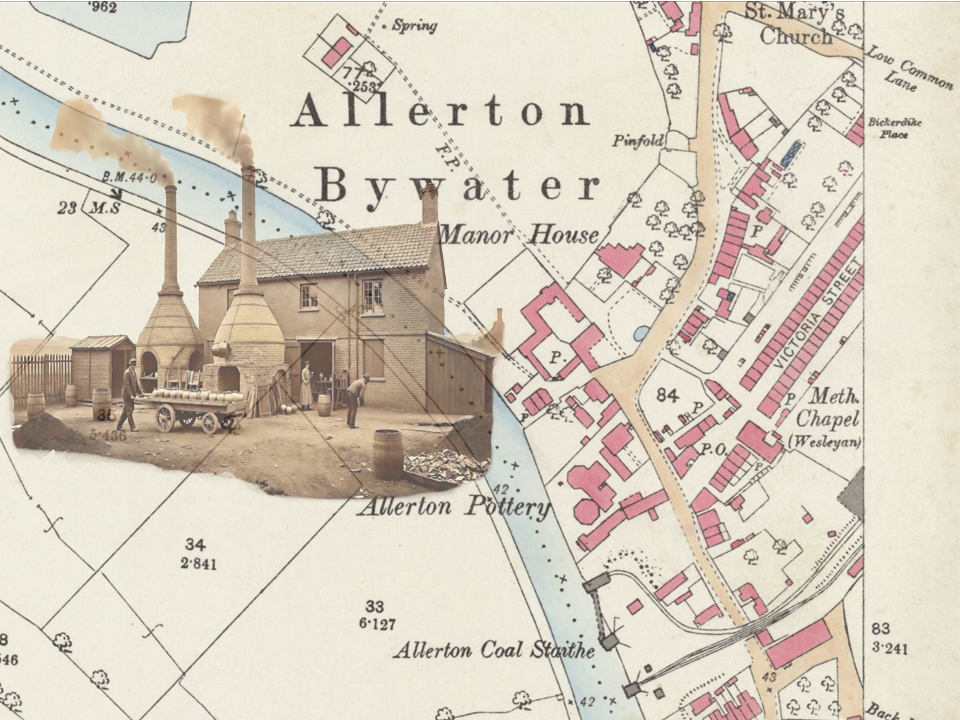
All the researched data is under continuous review and can be updated or ammended at any time. Everyone in the group is welcome to add to this research.
Historical Events surrounding Allerton Bywater Pottery
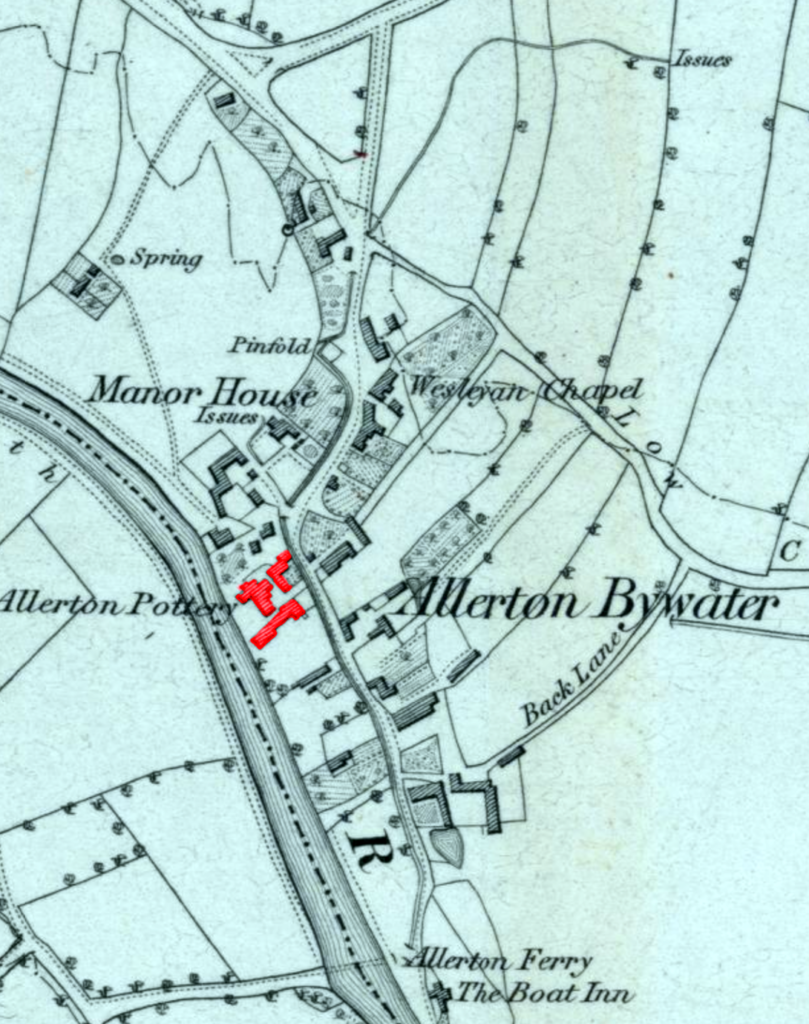
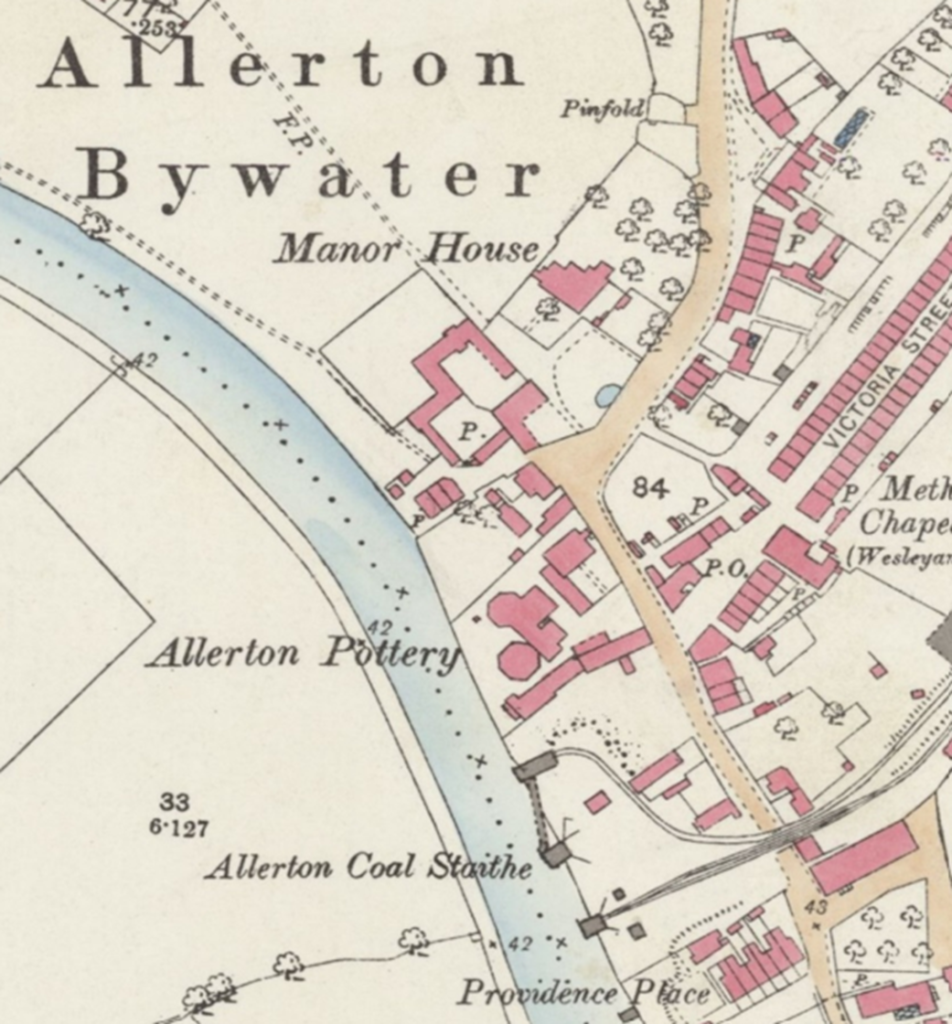
This map dated 1852 shows the location of Allerton Bywater Pottery
The pottery appears active around 1836 owned by Thomas Dobson and T. Jeffery and producing stone bottles.
1836 – SATURDAY – 9 JANUARY 1836
THE YORKSHIRE GAZETTE and H. R. H. DUKE OF YORK`S GAZETTES
Published the following articles


REPORTED PARTNERSHIPS DISSOLVED. 1836
Between Thomas Dobson and Thomas Jeffery, Allerton Bywater, Yorkshire, stone bottle manufacturers.
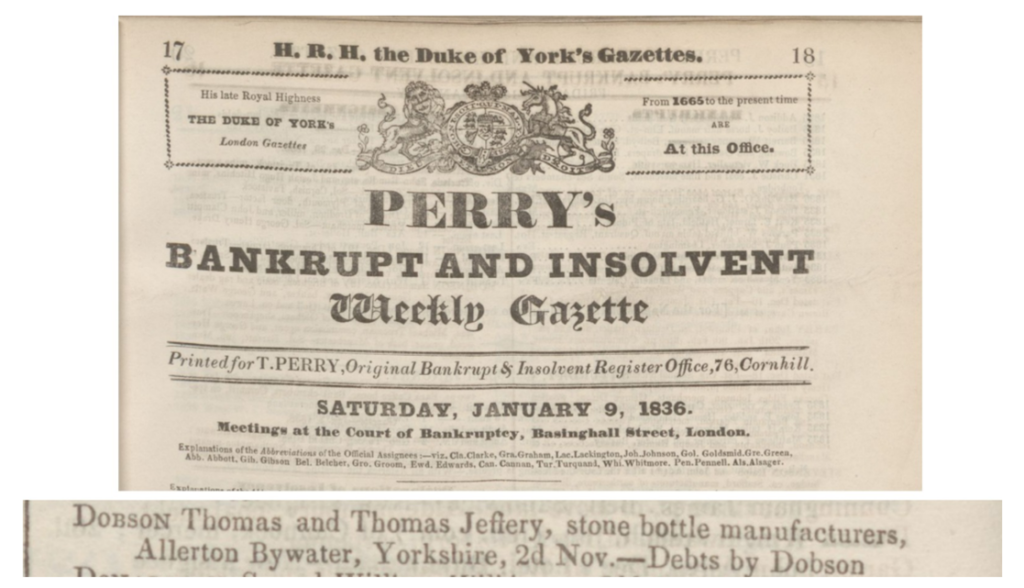
Dobson Thomas and Thomas Jeffery, stone bottle manufacturers, Allerton Bywater, Yorkshire, 2nd Nov. – Debts by Dobson
Despite the above report, Thomas Dobson looks to carry on the business as “Stone and Blackware Manufacturer” and appears to erect some new buildings.
ISSUES WE ARE UNABLE TO AUTHENTICATE
- 1838, an Indenture of Enforcement was recorded that involved Thomas Davison Bland and Thomas Dobson, indicating the Bland connection to the Allerton Pottery. This suggests that they played a role in the pottery’s operations or ownership during that time.
NOTE: – An Indenture of Enforcement typically refers to a legal document that outlines the terms and conditions governing the issuance and management of bonds or other financial issues.
2. NOVA SCOTIA – IS MENTIONED IN RELATION TO THE POTTERY
It is said — Clay was removed from the NOVA SCOTIA site to a depth of approx 8 to 10 metres. It was taken by horse and cart to the pottery and the excavation was refilled with debris from the pottery.
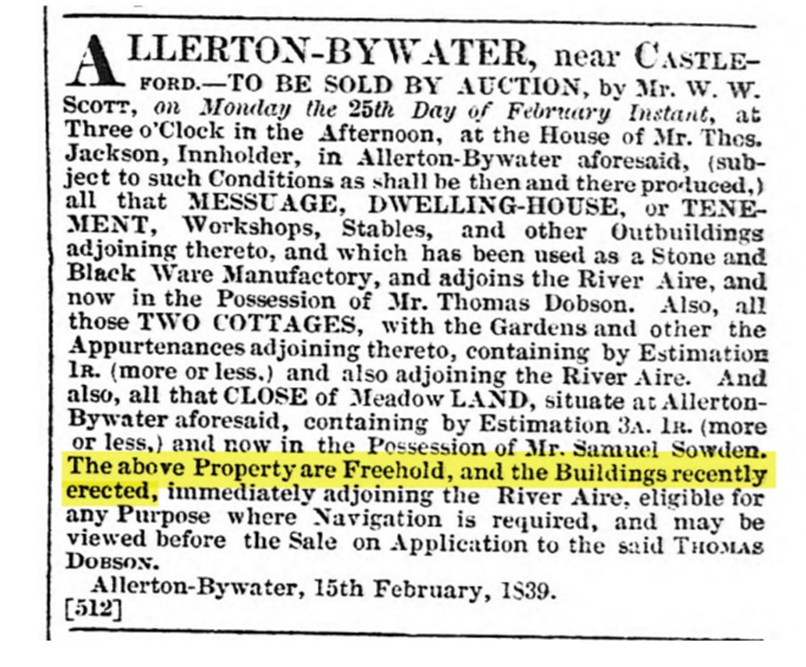
1839 On 15 February 1839 in THE YOKSHIRE GAZETTE, the business is advertised for sale under Thomas Dobson’s name.

IN 1841 CENSUS THOMAS JACKSON IS THE PUBLICAN OF THE FERRY INN (BOAT INN )
REFERENCE IS MADE TO THE POTTERY IN 1841 SALE
T Carr respectfully announces that he is directed, by the assignees of Mr James Wells of Allerton Bywater Pottery, to sell by auction, on Wednesday and Thursday, the 3rd and 4th of March 1841, (without reserve) all his modern Household furniture and the implements of Trade. –
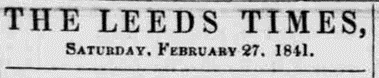
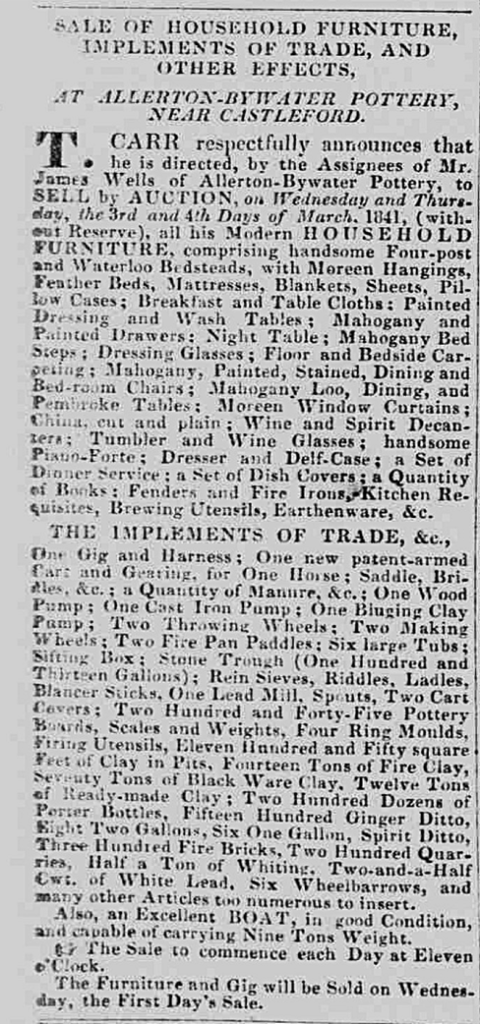
| SALE OF HOUSEHOLD FURNITURE, IMPLEMENTS OF TRADE, AND OTHER EFFECTS, AT ALLERTON-BYWATER POTTERY, NEAR CASTLEFORD. T. CARR respectfully announces that he is directed, by the Assignees of Mr. James Wells of Allerton-Bywater Pottery, to sell at AUCTION, on Wednesday and Thursd- ay next, at Eleven o’Clock, (with the usual Reserve,) all hisModern HOUSEHOLD FURNITURE, comprising handsome Four-post and Waterloo Bedsteads, with Moreen Hangings, Feather beds, Mattresses, Blankets, Sheets, Pillow Cases; Breakfast and Table Cloths; Painted Dressing and Wash Tables: Mahogany and Painted Drawers; Night Tables: Mahogany Bedsteps; Dressing glasses Floor and Bedside carpeting; Mahogany Painted Stained, Dining and Bed-room Chairs; Mahogany Loo, Dining, and Pembroke Tables; Moreen Window Curtains; China Cut and Plain; Wine and Spirit Decanters; Tumbler and Wine Glasses; handsome Piano-Forte; Dresser and Delf-Case; A Set of Dinner Service; A set of Dish Covers; A Quantity of Books; Fenders and Fire Irons; Kitchen Requisites, Brewing Utensils, Earthenware, &c. THE IMPLEMENTS OF TRADE, &c. One Gig and Harness; One new patent-armed Car; and Gearings, for One Horse; Saddle, Bridle, &c. A Quantity of Manure, &c.; One Wood Pump; One Cast Iron Pump; One Bluging Clay Pump; Two Throwing Wheels; Two Making Wheels; Two Fire Pan Paddles; Six large Tubs; Sifting Box, Stone Trough; ( One Hundred and Thirteen Gallons) Rein Sieves; Riddles, Ladels, Blancer Sticks, One Lead Mill, Spouts, One Cart Cover; Two Hundred and Forty-Five Pottery Boards, Scale and Weights; Ring Moulds, Firing Utensils; Eleven Hundred and Fifty square feet of Clay in Pits, Fourteen tons of Fire Clay, Seventy Tons of Black Ware Clay, Twelve Tons of Ready made Clay, Two Hundred Dozens of Porter bottles, Fifteen Hundred Ginger Ditto, Eight Two Gallons, Six One Gallon, Spirit Ditto, Three Hundred Fire Bricks, Two Hundred Quarries, Half a Ton of Whiting, Two and Half Cwt. of White Lead, Wh6 Wheelbarrows, and many other Articles too numerous to insert. Also, an Excellent BOAT, in good Condition, and capable of carrying Nine Tons Weight. |
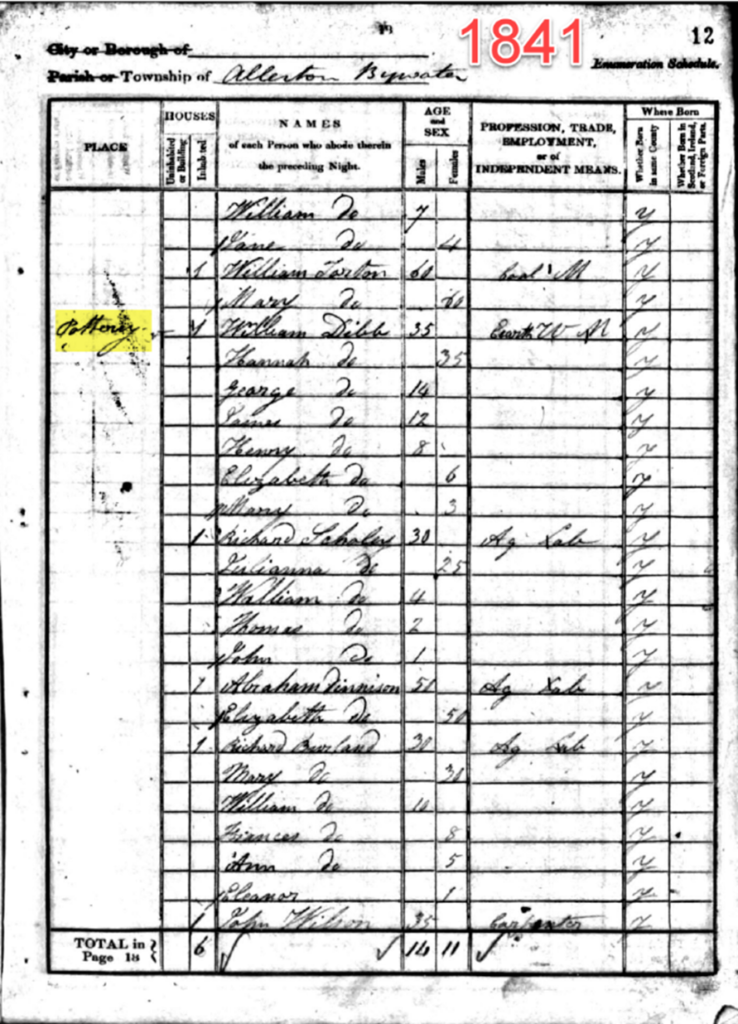
1841 – In the Census taken 6 JUNE 1841
William Dibb appears to have purchased the pottery
It gives his birthplace as Methley and he is described as an Earthenware Manufacturer.
He lives at the Pottery with his wife and 5 children.
| William Dibb | 35 Years |
| Hannah Dibb | 35 Years |
| George Dibb | 14 Years |
| James Dibb | 12 Years |
| Henry Dibb | 8 Years |
| Elizabeth Dibb | 6 Years |
| Mary Dibb | 3 Years |
Earthenware is one of the most ancient types of pottery produced. It is made from a coarse grain clay and has been used for thousands of years throughout history for a number of different purposes. Over time, earthenware has been made from a type of clay known as red earthenware or, perhaps more familiarly, terracotta.
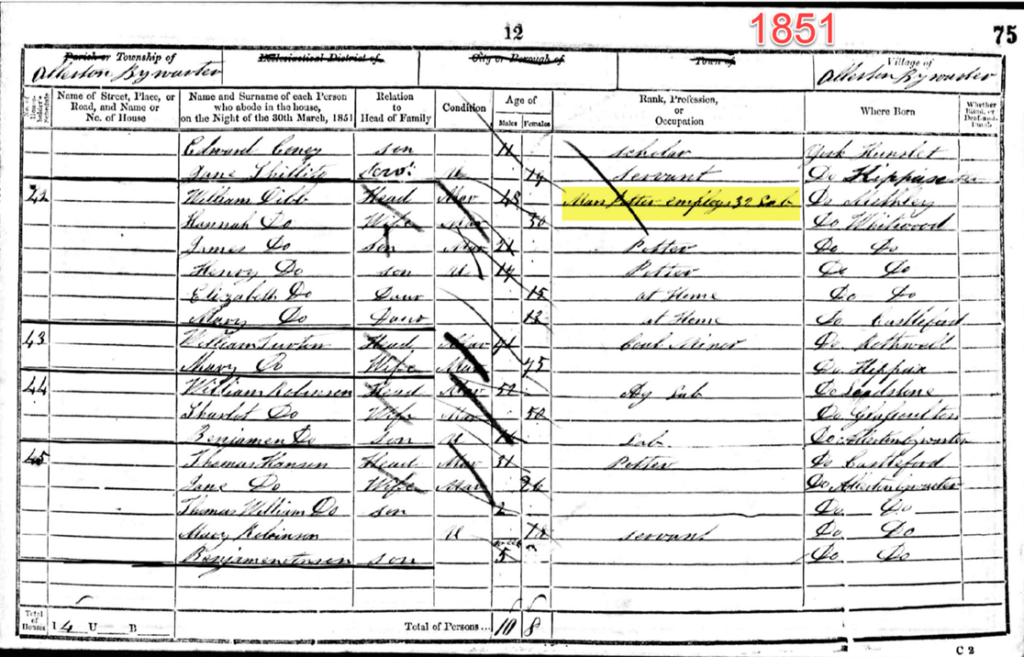
1851 Census.
William Dibb is described as Main Potter employing 32 operatives.
His sons George, James and Henry all work here as Potters
| William Dibb | 48 Years |
| Hannah Dibb | 50 Years |
| George Dibb | 24 Years (not at home, married and living in Allerton Bywater) |
| James Dibb | 21 Years |
| Henry Dibb | 17 Years |
| Elizabeth Dibb | 16 Years |
| Mary Dibb | 13 Years |
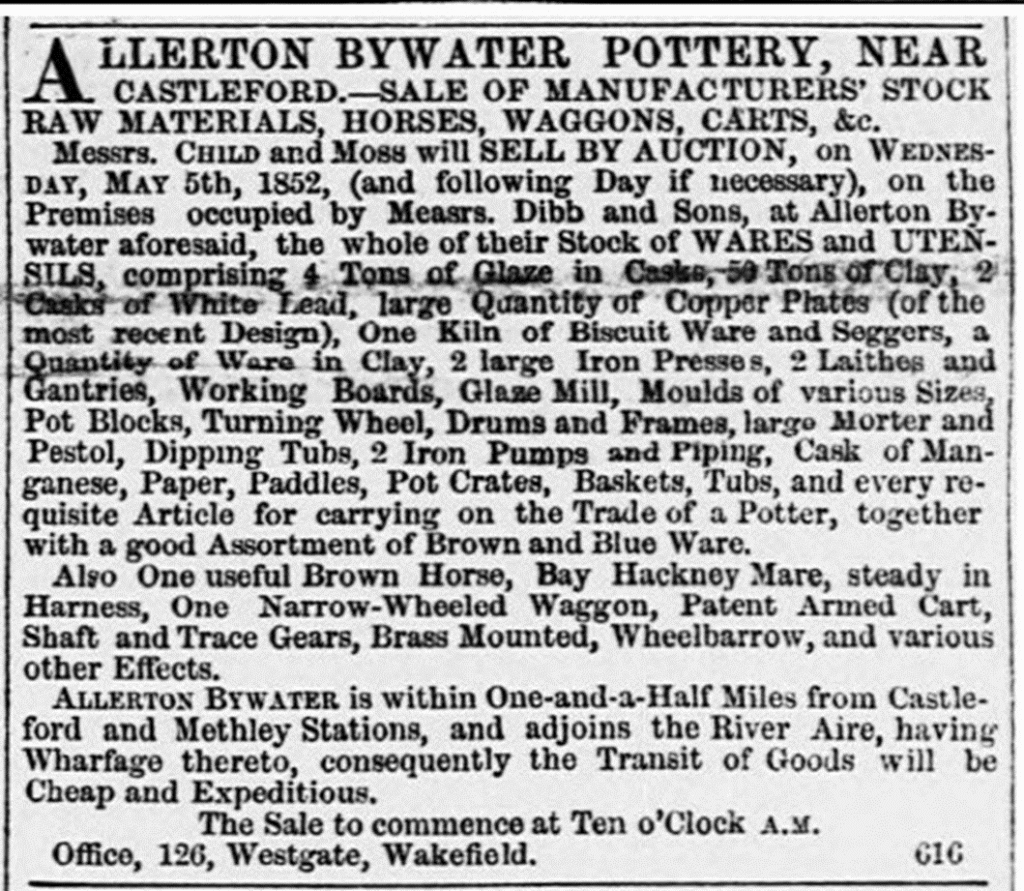
1852 – 1 May 1852 A Sale of manufacturers’ stock, etc., for Mr Dibb and sons.

1861 Census.
William Dibb has moved to Knaresborough and is described as an Earthenware Dealer.
It seems his sons have also moved on and left the pottery.
HUGH MacDOWELL appears in Allerton Bywater on the 1861 Census with his wife Margaret, 5 children, a nephew, a niece and 2 servants. He is described as a Earthenware Manufacturer, He originates from Scotland, but has interests in several local potteries between 1856 and 1862 including Allerton Bywater Pottery, Eagle Pottery, and Castleford Mere Pottery under the name of Hugh McDowell & Co
* also living with him are Nephew Hugh Macdowel and Niece Elizabeth who both have the surname “ Clokie “ another name synonymous with the local “ Castleford and Albion potteries “.
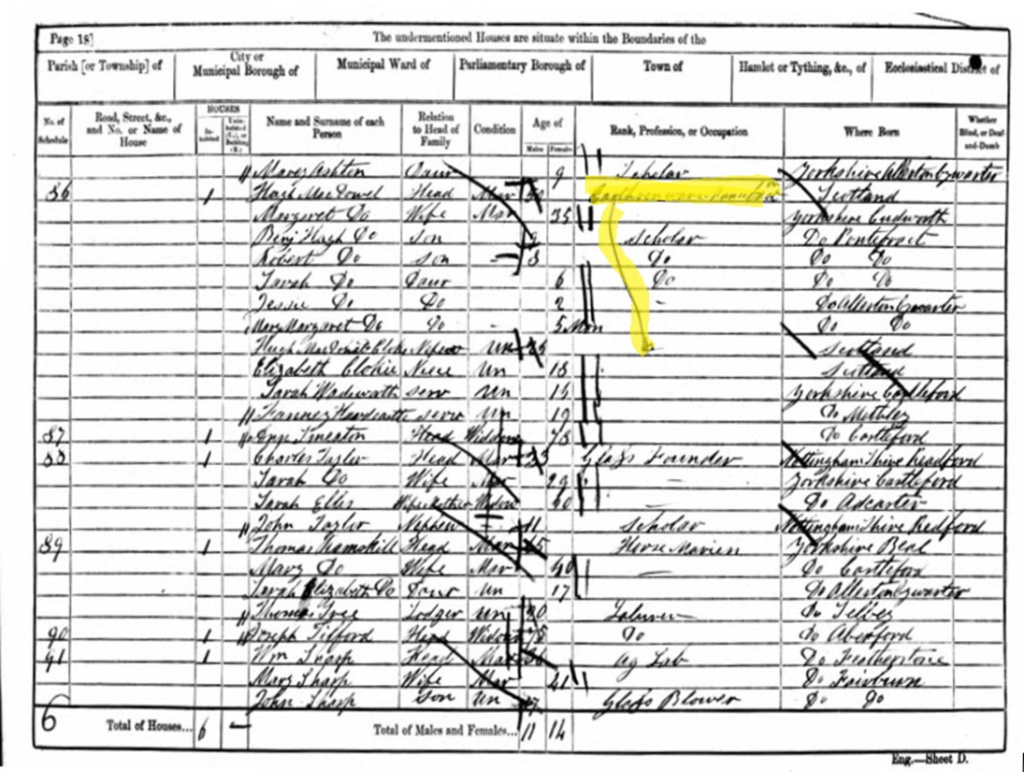
Allerton Bywater 1861 Census – Hugh MacDOWELL
| Hugh Macdowell | 50 | Head |
| Margaret Macdowell | 35 | Wife |
| Benj. Hugh Macdowell | 9 | Son |
| Robert Macdowell | 8 | Son |
| Sarah Macdowell | 6 | Daughter |
| Jessie Macdowell | 2 | Daughter |
| Mary Margaret Macdowell | 5/12 | Daughter |
| Hugh Macdowell Clokie | 25 | Nephew |
| Elizabeth Clokie | 18 | Niece |
| Sarah Wadsworth | 16 | Servant |
| Fanney Hardeartte | 19 | Servant |
For further Reference:- The above 1861 Census appears to indicate that both Hugh Macdowell and Hugh Macdowell Clokie, are both linked as Earthenware manufacturers and are possibly in business together.
Historical Note:-
Heather Lawrence in Yorkshire Pots and Potteries described Hugh MacDowell as ‘something of a tycoon in the pottery trade’. This appears to be an exaggeration, although being involved with a number of potteries in the Castleford area.
He was a tea merchant from nearby Pontefract, but originated from Scotland.
Known for it`s “White Ware ” the Eagle Pottery was the only pottery that MacDowell actually controlled. It had been constructed in 1853 and he purchased it in 1856 after the owners became bankrupt.
He continued here until his death in 1868, firstly as Hugh MacDowell & Co and then as John Roberts & Co.
The partnership with Roberts being dissolved in 1868, shortly before McDowell’s death.
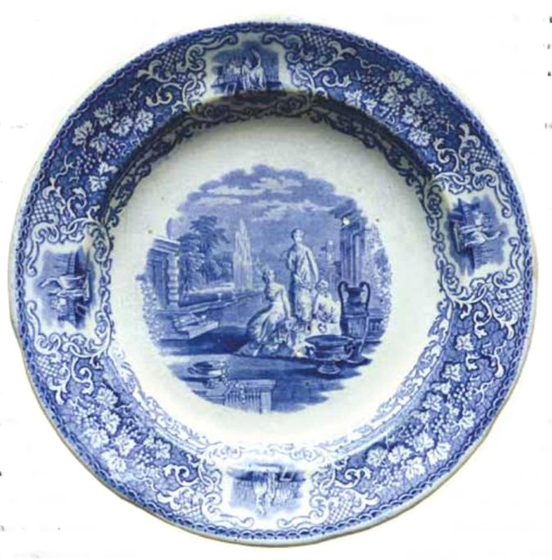
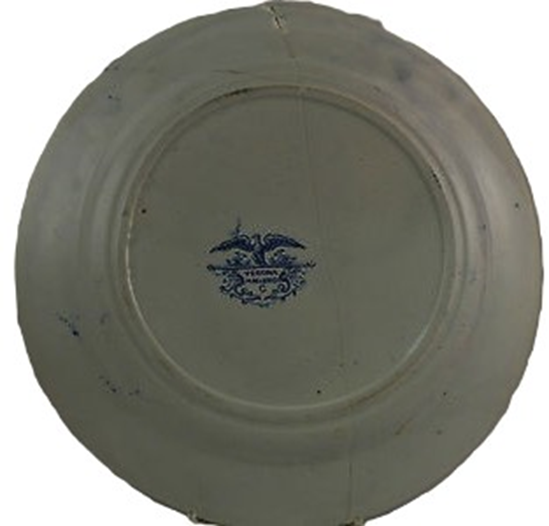
VERONA PATTERN PLATE Attributed to Hugh MacDowell
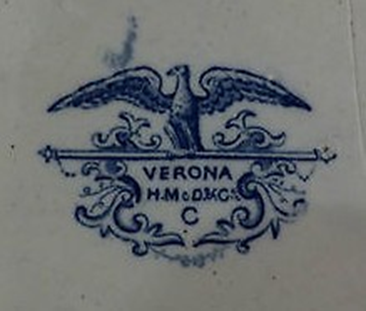
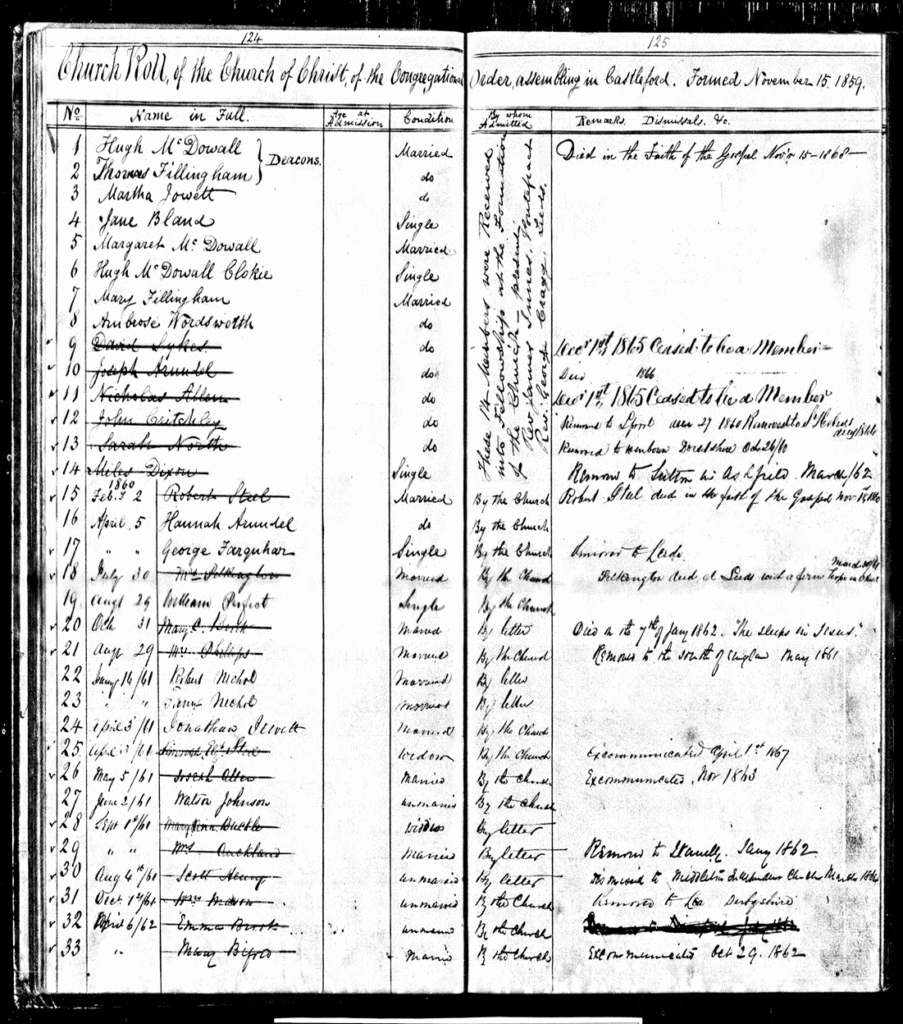
1861 – Hugh MacDowell died on the 15th of November 1868
From the document below Hugh MacDowell is listed as a Deacon of The Church of Christ of the Congregation Order and died in the faith of the Gospel –
15th of November 1868
Hugh MacDowell Will 9th March 1869
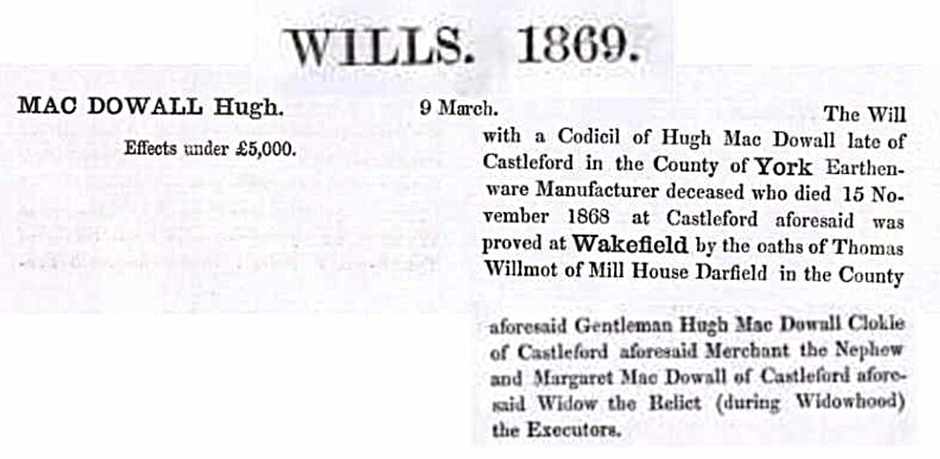
The Estate of Hugh Macdowell is left to his widowed wife Margaret and Hugh Macdowel Clokie his nephew.
As previously Referenced:-The 1861 Census appears to indicate that both Hugh Macdowell and Hugh Macdowell Clokie, his nephew, are both Earthenware manafacturers and it would seem possible they are both managing their businesses together as this WILL in 1868 appears to confirm.
Pottery workers from Allerton Bywater in the 1861 Census.
All these appear to be potters in Allerton Bywater at this time; however, they may not all have worked at the Allerton Bywater pottery.
| Hugh MacDowell | George Dibb |
| John Ellis | Joseph Dibb |
| William Robinson | Harriet Dibb |
| John Robinson | Kate Dibb |
| Thomas Allerton | George Ashton |
| Mathew Bullough | William Ashton |
| Joe Bullough | Samuel Henry Skelton |
| George Norton | Henry Skelton |
| Mary Ann Norton | David Skelton |
| Ellen Norton |
1871 Census.
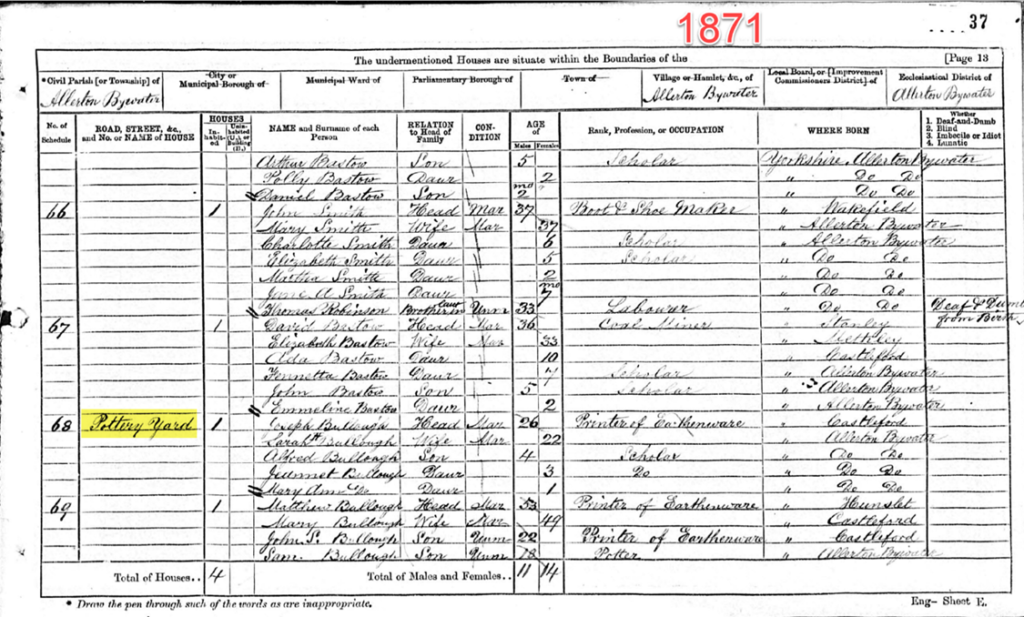
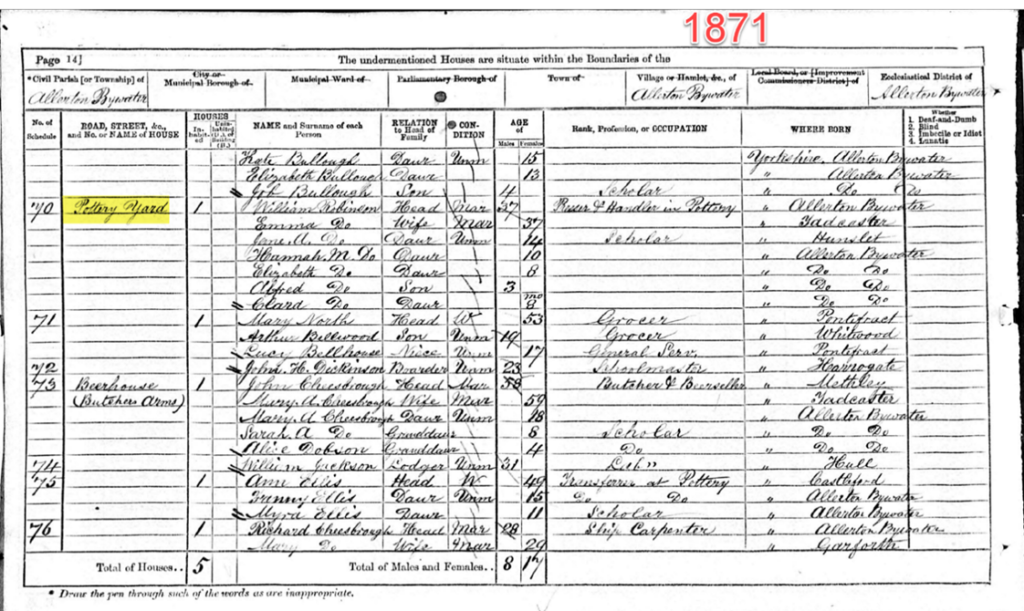
The pottery appears to be still in production in this 1871 Census
Some names are still prominent:-
William Robinson who is described as Handler in Pottery
Joseph, Mathew and John Bullough are described as Printers of earthenware
John Robinson.
Sam Bullough.
Anne Ellis is described as a transferor of pottery.
However this is not a complete list and it is unclear who the actual owner is.
It has to be assumed it is still under the ownership of the beneficiaries of
Hugh MacDowell`s will. “ Hugh Macdowell Clokie “
Thomas Robinson appears to be the next owner of Allerton Bywater Pottery; strangely, his prior occupation between 1868 and 1876 was that of a TAILOR.
1871 Census shows he originates from Methley, he is resident in Methley Road, Whitwood Mere, and electoral registers indicate he has a Home, Shop and Premises there.
1871

From the electoral registers of 1876, he appears as resident in Allerton Bywater, but still has a Home, Shop and Premises in Whitwood Mere
1876

1877 he has a pottery business and is resident in Allerton Bywater
1877

1878


1881 Census

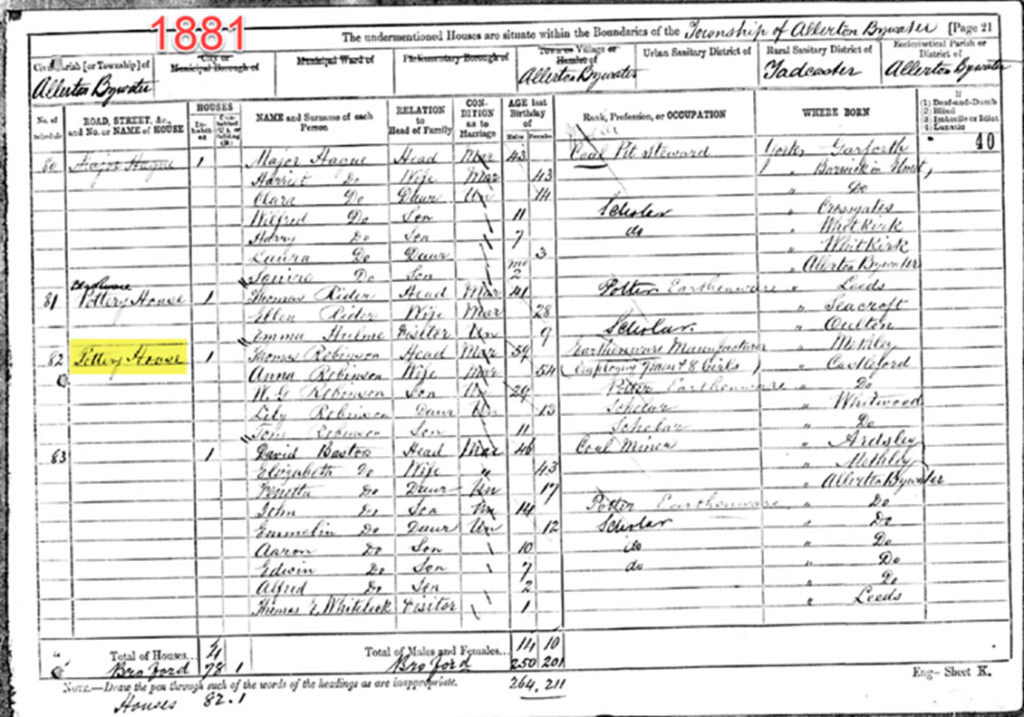
| Thomas Robinson | 59 |
| Anna Robinson | 54 |
| W.G. Robinson | 29 |
| Lily Robinson | 13 |
| Tom Robinson | 11 |
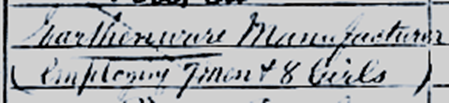
Thomas Robinson is recorded as Earthenware Manufacturer living at Pottery House, employing 7 men and 8 girls.
The pottery is described later, as being 20 yards long by eight yards broad with an upper room.
Thomas Robinson owned the Pottery between 1881 and 1888
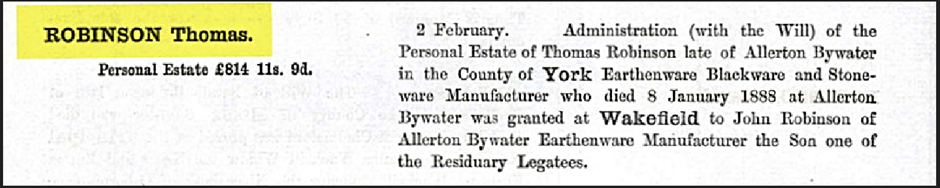
1881 – 8 January 1888 – Thomas Robinson dies,
His will – 2 February 1888 values his estate at £814 11s 9d. and passes to his son John Robinson of Allerton Bywater
1888 – Friday 4th of May 1888

Friday 4th of May 1888 a fire broke out at the Pottery
Fires in Leeds.
At about half-past one o’clock, Superintendent Baker received a telegram from Mr. Thomas Robinson, of the Allerton Pottery, near Castleford, to the effect, “Send fire engine at once; fire raging.” The new tender was at once despatched, with two horses attached, and was followed a few minutes later by the steamer, drawn by four horses. In the short space of fifty minutes the scene of the fire was readied, but it was then found that the fire had been extinguished with the exception that the ends of several of the beams were burning. Those the fire brigade soon put out. The building which had been attacked was 20 yards long by eight yards broad, and the upper room in which was stored two tons of straw, this and the roof were destroyed. The damage, which is estimated at £700, is covered by insurance in the Liverpool and London and Globe office. The fire was caused by a pan of wax boiling over.
On the way to Allerton, while turning out of Great Wilson-street into Hunslet Lane, one of the leading horses of the steamer fell, and Police-constable Moore, who was riding it, received such an injury to his knee that he had to turn back. The animal was not injured.
Source – The Leeds Mercury – Friday, May 4, 1888; Issue 15624
- A question has to be raised around the sender of the Telegram `Thomas Robinson`, presumably it is the brother and partner of John.
Map showing Pottery around 1890
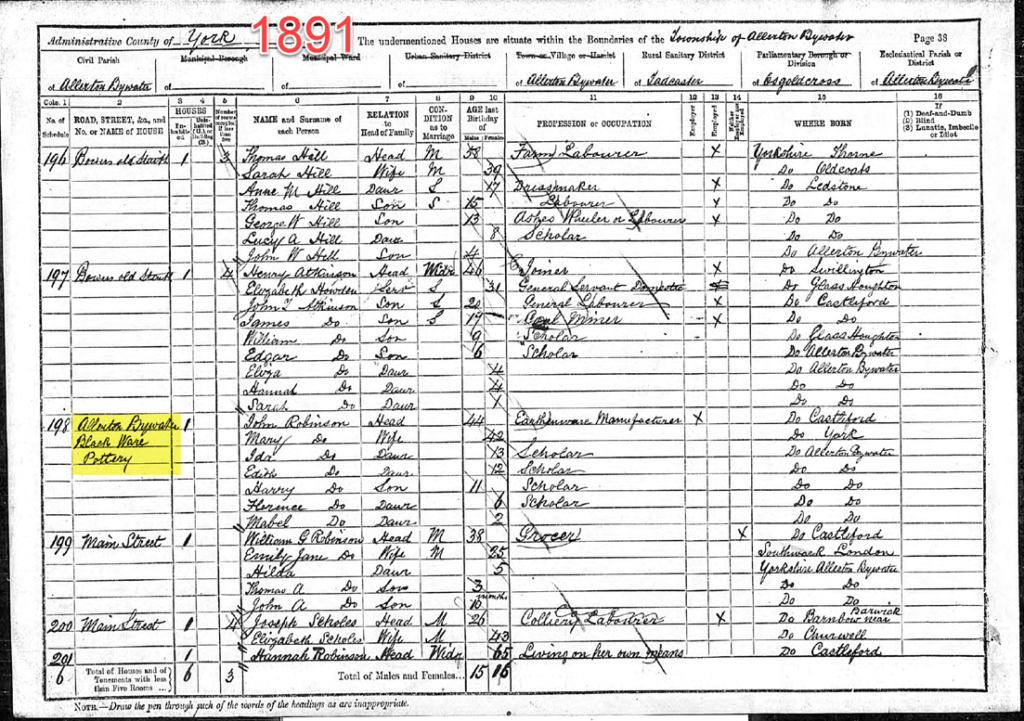
1891 Census
John Robinson is listed as ` Earthenware Manufacturer ` living in Allerton Bywater at the Blackware Pottery, situated on Main Street, with his wife and five children.
Census A
Thomas Robinson is listed as ` Master Potter – Earthenware ` and is living nearby on Main Street Allerton Bywater, at Providence Place.
Census B
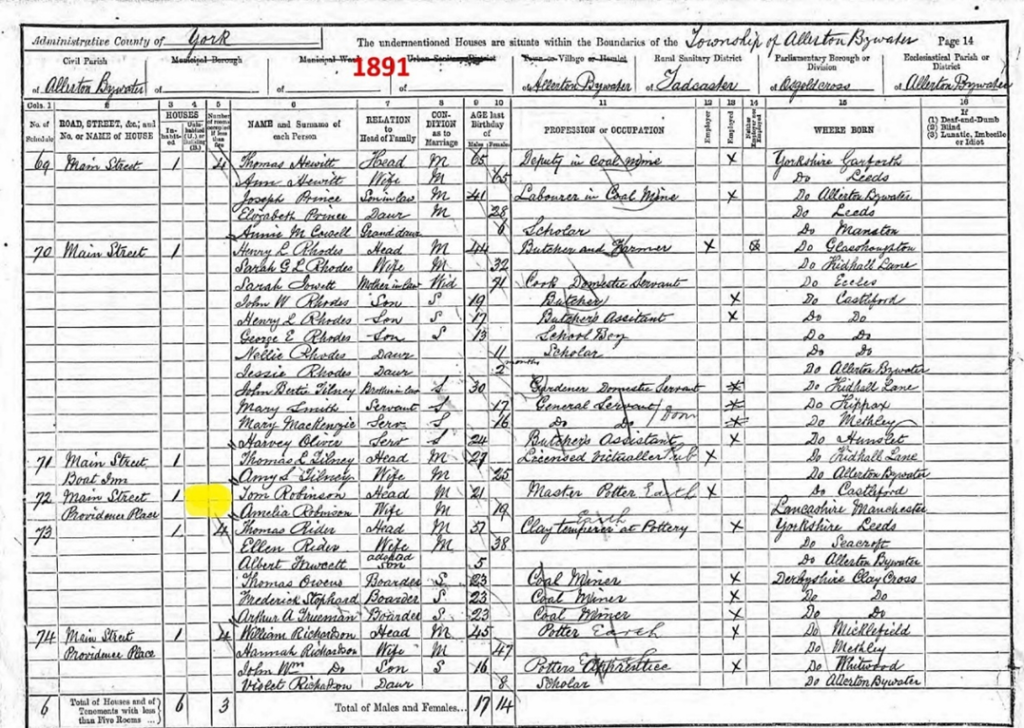
| Census A | Census B | ||
| John Robinson | 44 | Tom Robinson | 21 |
| Mary Robinson | 42 | Amelia Robinson | 19 |
| Ida Robinson | 13 | ||
| Edith Robinson | 12 | ||
| Harry Robinson | 11 | ||
| Florence Robinson | 6 | ||
| Mabel Robinson | 2 |
1891 Robinson Bros. Partnership – John Robinson / Tom Robinson
The historic Allerton Bywater Pottery was operated by the Robinson Brothers (John and Thomas) in the late 19th and early 20th centuries.
1893 The Robinson Brothers owned Eleven Acres Pottery on Nicholson Street, Half Acres. .
POTTERY MARK FOR ROBINSON BROTHERS

They appear to be producing “Blackware and Common Earthenware Pottery”
Information Note:- What is Blackware Pottery ?
How is Blackware pottery made?
It is created through a process that involves combining various natural materials. Firstly, raw materials such as clay, earthen minerals, and water are assembled together. These ingredients are then carefully moulded into desired shapes using techniques like hand-building or wheel-throwing. After shaping, the clay body undergoes a crucial step called firing, where it is placed inside a kiln and exposed to high temperatures. This firing process not only hardens the pottery but also enhances its heat resistance, transforming it into the beautiful and durable ceramic objects we admire.
Creating Blackware pottery employs a distinct technique known as fire reduction. This involves manipulating the oxygen levels within the kiln, resulting in an oxygen-deprived environment. The fire is then suppressed by covering it with cow or horse dung during the firing process, causing the pottery to undergo carbonisation. This meticulous process imbues the pottery with its characteristic black hue, rendering each piece ‘one of a kind.’
What is the use of black pottery?
Black pottery has a diverse range of uses beyond just cooking and food storage. Its unique properties make it an ideal choice for enhancing the flavours and nutritional values of dishes. Additionally, black pottery is renowned for its ability to convert acidic foods into alkaline, promoting better digestion. Its toxin-free nature ensures a healthier cooking environment, making it an excellent option for any kitchen. Moreover, the sleek black appearance of black pottery adds an elegant touch to any table setting, making it a versatile and aesthetically pleasing option for serving food.
1898 The Allerton Pottery is in the hands of his executors
WEDNESDAY 23 FEBRUARY 1898
PARTNERSHIPS DISOLVED
J. Robinson and T. Robinson, Allerton Bywater earthenware and pottery manufacturers

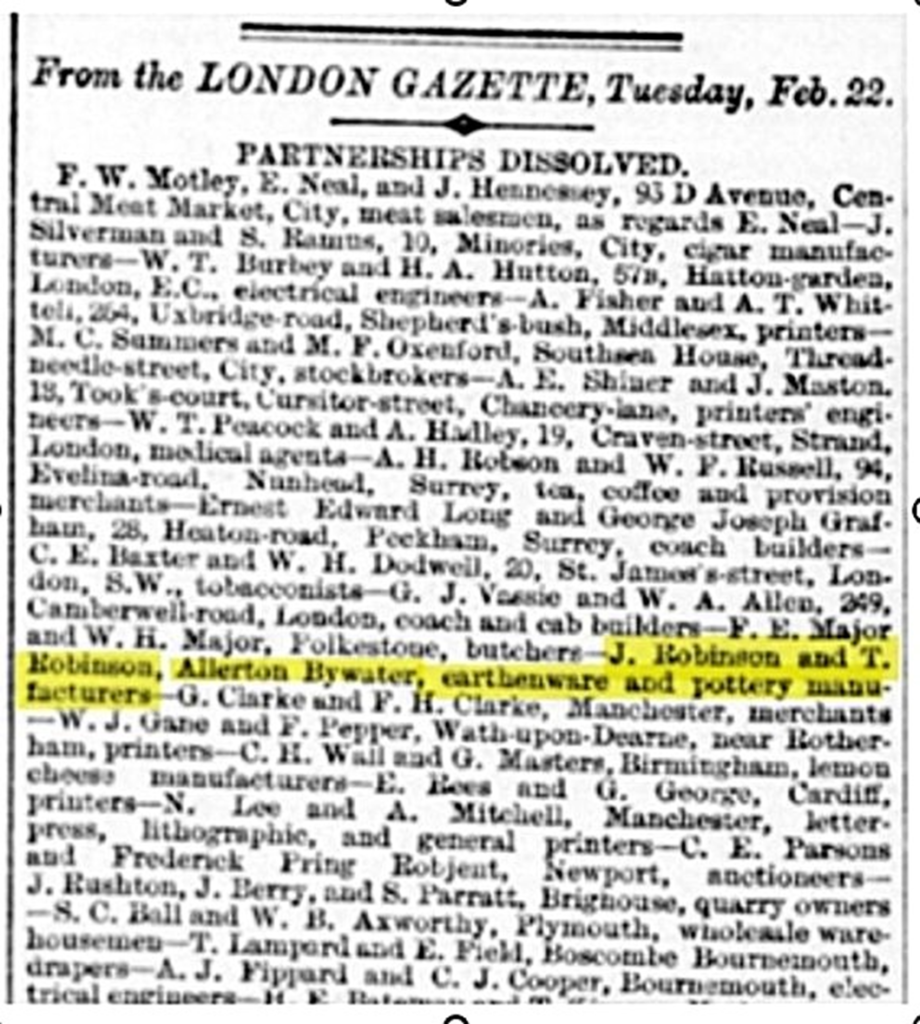
JOHN ROBINSON CONTINUES HIS POTTERY CONCERNS IN CASTLEFORD AREA

TOM ROBINSON CONTINUED TO RUN THE ALLERTON BYWATER POTTERY AFTER THE PARTNERSHIP WAS DISSOLVED.
1901 Census – TOM ROBINSON
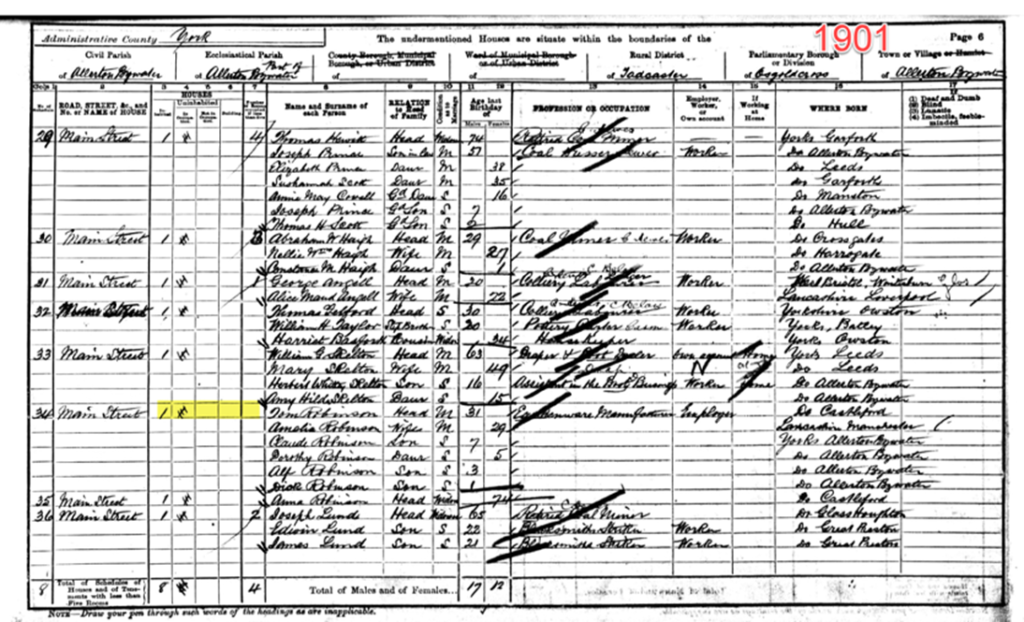

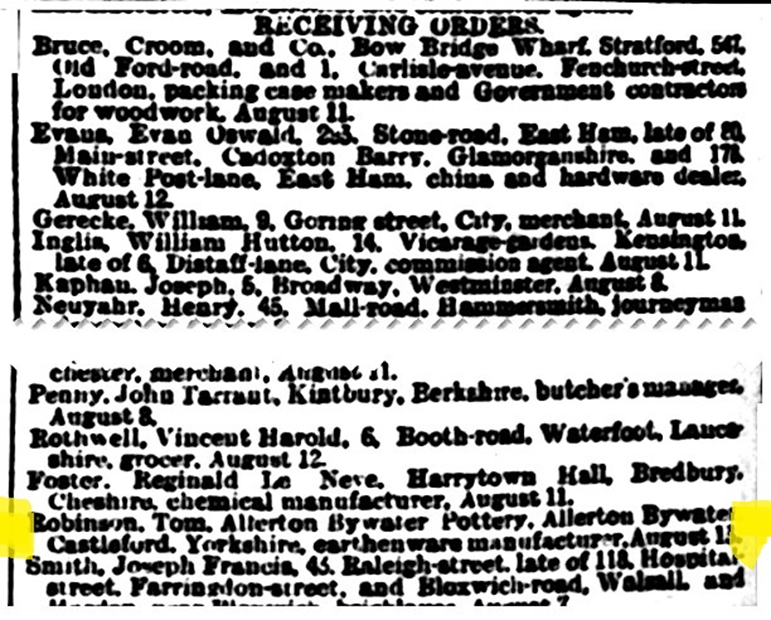
1902 – Tom Robinson faced bankruptcy at the Allerton Pottery
16 August 1902
Receiving orders on Tom Robinson 13 August 1902
THE EDINBURGH GAZETTE, AUGUST 19, 1902.


1902 – For sale due to bankruptcy.
SATURDAY 27 September 1902
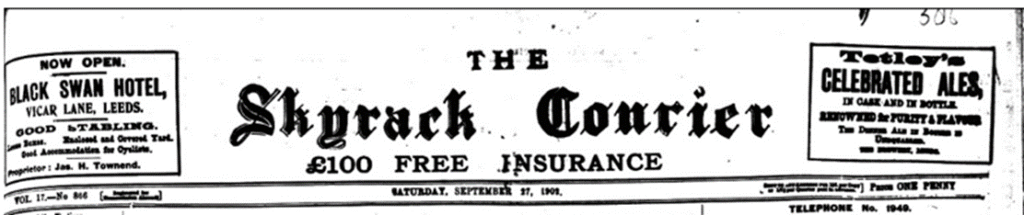
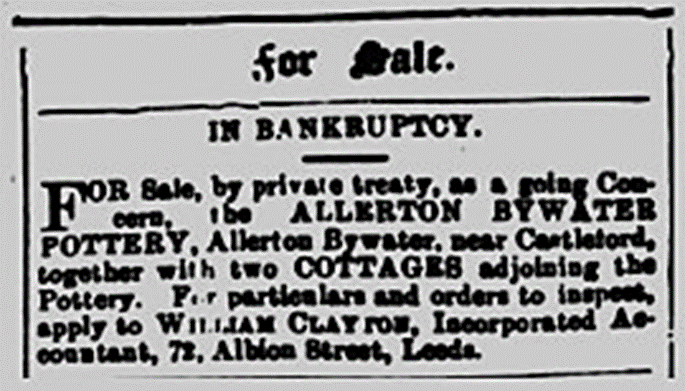
For sale by private treaty, as a going concern, the ALLERTON BYWATER POTTERY, Allerton Bywater near Castleford, together with two COTTAGES adjoining the Pottery. For particulars and orders to inspect, apply to WILLIAM CLAYTON, Incorporated accountants, 72 Albion Street, Leeds.
1903 — For sale with covenant
03 SATURDAY January 1903
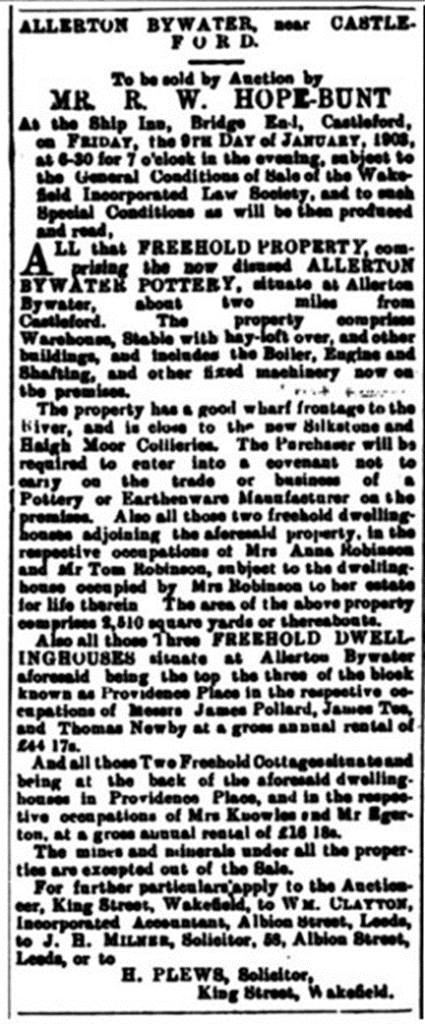
TRANSCRIPTION
3 JANUARY 1903. – ALLERTON BYWATER, CASTLEFORD.
To be sold by Auction by MR. R. W. HOPE-BUNT
At the Ship Inn, Bridge End, Castleford, on FRIDAY, the 9TH DAY of JANUARY, 1863, at 8-30 or 7 o’clock in the evening, subject to the General Conditions of Sale of the Wakefield Incorporated Law Society, and to such Special Conditions as will then be produced and read.
ALL that FREEHOLD PROPERTY, comprising the NEW disused ALLERTON BYWATER POTTERY, situate at Allerton Bywater, about two miles from Castleford.
The property comprises Warehouse, Stable with hay-loft over, and other buildings, and includes the Boiler, Engine and Shafting, and other fixed machinery now on the premises.
The property has a good wharf frontage to the river, and is close to the new Silkstone and Haigh Moor Collieries.
The purchaser will be required to enter into a covenant not to carry on the trade or business of a Pottery or Earthenware Manufacturer on the premises.
Also all those two freehold dwelling-houses adjoining the aforesaid property, in the respective occupations of Mrs Anna Robinson and Mr Tom Robinson, subject to the dwelling-house occupied by Mrs Robinson to her estate for life therein.
The area of the above property comprises about 2510 acres, square yards or thereabouts.
Also all those Three FREEHOLD DWELLING HOUSES situate at Allerton Bywater aforesaid being the top three of the block known as Providence Place in the respective occupations of Messrs James Pollard, James Tee?, and Thomas Newby at a gross annual rental of £44. 17s.
And all those Two Freehold Cottages situated and being at the back of the aforesaid dwelling-houses in Providence Place, and in the respective occupations of Mrs Knowles and Mr Egerton, at a gross annual rental of £16 18s.
The mines and minerals under all the properties are excempted out of the Sale.
For further particulars apply to the Auctioneer, King Street, Wakefield, or to W.M. CLAYTON, Incorporated Accountants, Albion West, Leeds to J. R. MILNES ?, Solicitor, 86, Albion Street, Leeds or to H. PLEWS, Solicitor, King Street, Wakefield.
1903 –The pottery is no longer an active commercial enterprise;
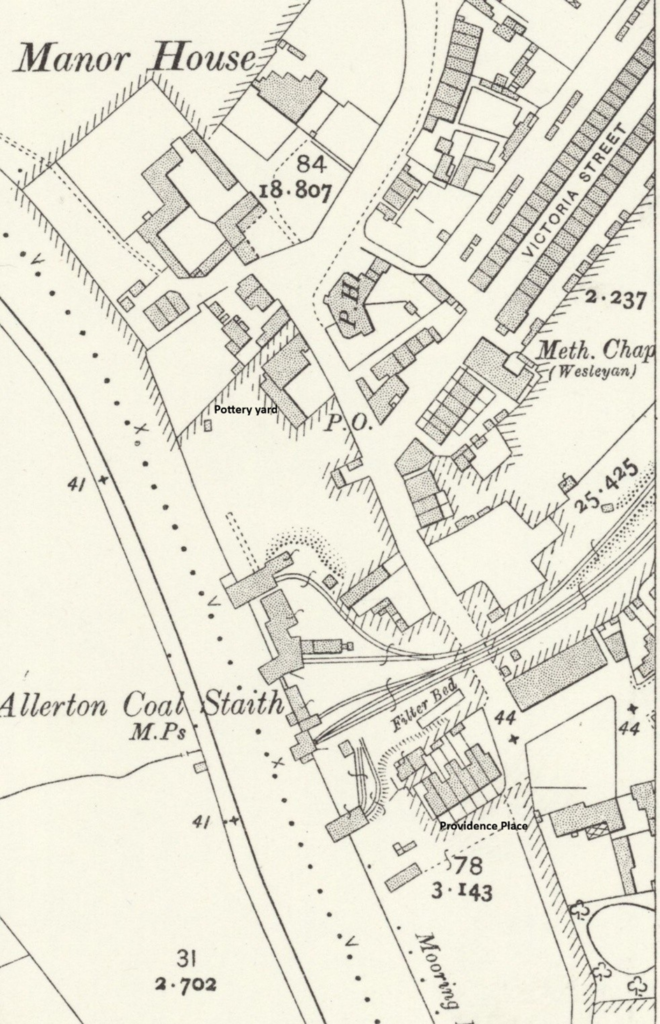
the site was located between the River Aire and Main Street and the business closed down.
1908 – Map showing Pottery around 1908
1911
John and Tom Robinson both maintain occupations in the Pottery business


2022
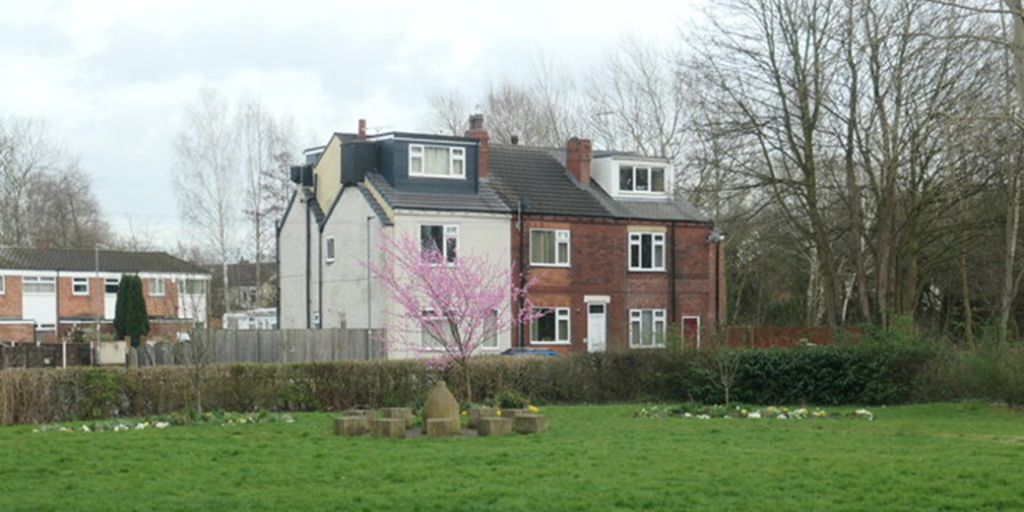
Public Garden, Allerton Bywater
In the middle of the seating area is a model of a bottle oven. This commemorates the Allerton Bywater pottery which was close to this site. The pottery was in business by 1838 but had closed by 1903
BACKGROUND INFORMATION TO ALLERTON BYWATER and LOCAL POTTERIES
And the ROBINSON FAMILY
| The brothers, John and Tom Robinson, also operated a pottery in Castleford known as Eleven Acres Pottery. Examples of their red earthenware flowerpots are shown below. The Encyclopaedia of British Pottery and Porcelain Marks gives two marks for the Allerton Pottery: R.B. for Robinson Brothers (1897–1904) and J.R & S. for John Robinson & Son (1905–1933). |


Red Earthenware Flower Pots
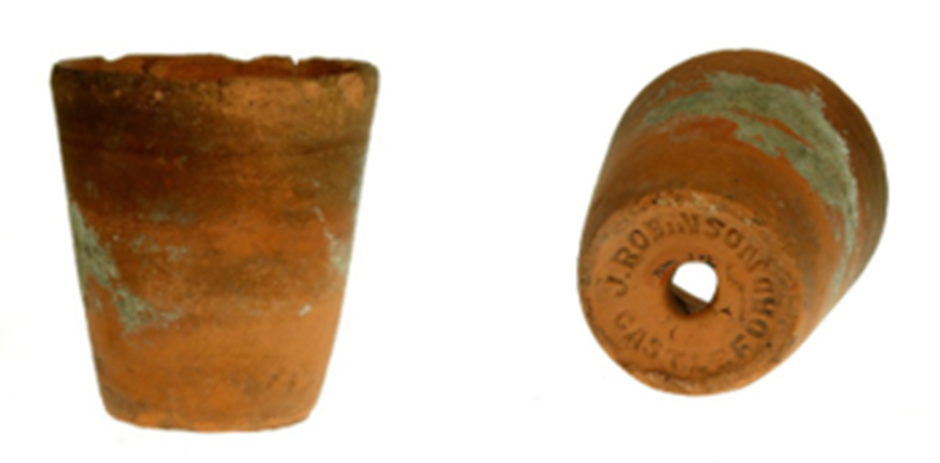
Smaller Castleford potteries produced inexpensive white earthenware. A few continued to use the coarser local red clay. Products included pancheons, ovenware, and stoneware bottles.
Clokie and Masterman established its pottery on the site of the Dunderdale pottery in 1825. The pottery changed names frequently, Castleford Pottery, Albion Pottery, and the Britannia Flint Mills. Clokie and Masterman specialized in plain white and blue band wares. The company also produced institutional China. Pieces from the 1920s and 1930s featured Art Deco designs.
Clokie & Co., Ltd., closed in 1961.
ARTICLE – Researched and Produced by :-
John and Keith Dickinson – Mick Taylor
Thanks to all who have previously researched the subject, some of which has been used to enhance the article
02 March 2026
Authors


