Herbert Smith, a towering figure in British trade unionism, rose from abject poverty in the Yorkshire coalfields to lead the miners through some of the most tumultuous labour struggles of the early 20th century. Born into hardship, he became a symbol of working-class resilience, advocating fiercely for miners’ rights while navigating complex industrial and political landscapes. His life embodied the grit of the mining communities he represented, marked by personal triumphs, union leadership, and unyielding opposition to exploitation.
Early Life and Entry into Mining (1862–1880s)
Herbert Smith was born on July 17, 1862, in the poor house (Gilbert Union workhouse) at Great Preston, near Kippax. His father, a miner, had been killed in a mining accident days earlier, and his mother died shortly after, leaving him orphaned. He spent his early years in the workhouse until adopted by Samuel Smith, a miner, and his wife Charlotte. (We can’t be certain that Smith was his birth name with him being adopted).
Smith received no formal schooling initially but later studied informally in Glasshoughton and Pontefract. Reared by his foster parents, he experienced the harsh realities of poverty firsthand, including time in a workhouse, which later fuelled his commitment to social welfare.
At age nine, in 1871, Smith began working in the fields. By age ten, in 1872, he descended into the pits at Glass Houghton Colliery, enduring the gruelling conditions typical of child labour in Victorian mining. Despite his youth, he quickly became active in union affairs. At seventeen, around 1879, he was elected to his union’s branch committee, marking the start of his lifelong involvement in trade unionism. He also developed a reputation as a talented boxer, holding titles as a prize fighter in the Yorkshire coalfields, which honed his fighting spirit.
Before turning twenty-one, likely in the early 1880s, Smith was elected to a local school board, serving as its chairman for twelve years. He also became a Guardian of the Poor, drawing on his own workhouse experiences to advocate for the vulnerable, much like fellow unionist Will Crooks.
Rising Through Union Ranks (1889–1905)
In 1889, Smith participated in the conference that formed the Miners’ Federation of Great Britain (MFGB), a pivotal step in unifying miners’ unions nationally. Officers included Ben Pickard as president, and the federation started with 36,000 members.
By 1894, his peers elected him as checkweighman at Altofts Colliery, a role ensuring fair weighing of coal and protecting miners’ earnings. In 1896, he became Chairman of the Castleford Trades Council, expanding his influence in local labour circles. In 1897, Smith joined the Independent Labour Party (ILP), aligning with socialist ideals that would shape his career.
In 1902, he was appointed to the joint board of the South and West Yorkshire Coal owners and Workmen, facilitating negotiations between labour and management. The following year, in 1903, he was elected to the West Riding County Council, demonstrating his growing political stature. In 1904, he advanced to Vice-President of the Yorkshire Miners’ Association (YMA).
Leadership in Yorkshire and National Emergence (1906–1913)
In 1906, Smith was elected President of the YMA, a position he held until his death in 1938. Under his leadership, he emphasized practical knowledge of mining, spending about three days a fortnight underground to stay connected with workers’ realities. This hands-on approach earned him respect and an unrivalled expertise in mining operations.
Smith stood unsuccessfully as a Labour Party candidate in the Morley constituency during the December 1910 general election, highlighting his ambition to influence policy through Parliament. That same year, he led rescue efforts at the Wellington Pit Disaster in Whitehaven, showcasing his bravery and commitment to miners’ safety—a pattern that would recur.
In 1912, during the Cadeby Main Colliery disaster, which claimed 136 lives, Smith performed exhaustive rescue work. King George V and Queen Mary visited the site, where the Queen was overcome by the tragedy. Eight years later, in 1920, upon being presented to the Queen, she recalled him as “the big man in a little brown jersey who went down the Cadeby mine,” underscoring his memorable presence.
World War I and Post-War Roles (1914–1921)
In 1914, Smith played a key role in forming the Triple Industrial Alliance with the National Union of Railwaymen and the National Transport Workers’ Federation, aiming for coordinated industrial action to challenge state power. However, the outbreak of World War I halted potential strikes, leading to an “Industrial Truce” where unions agreed to avoid disruptions in exchange for profit limitations on war-related industries.
During the war, miners’ output was critical, but enlistment depleted the workforce by 17.1%. Smith navigated wage disputes, including a 1915 South Wales strike where miners secured an 18.5% increase after government intervention. In 1916, amid coal shortages, the government assumed control of the industry, appointing Alfred Milner as Coal Controller. Smith was appointed to the Coal Controller’s Advisory Board in 1917.
That year, he also became Vice-President of the MFGB, serving until 1922. In 1921, he was elected President of the Miners’ International Federation, holding the role until 1929.
Presidency of the MFGB and Major Disputes (1922–1926)
In 1922, Smith was elected President of the MFGB, succeeding Robert Smillie. He also served as a Trades Union Congress (TUC) representative to the American Federation of Labour that year, alongside Edward L. Poulton. Elected to Barnsley Town Council in November 1923, he served for eleven years.
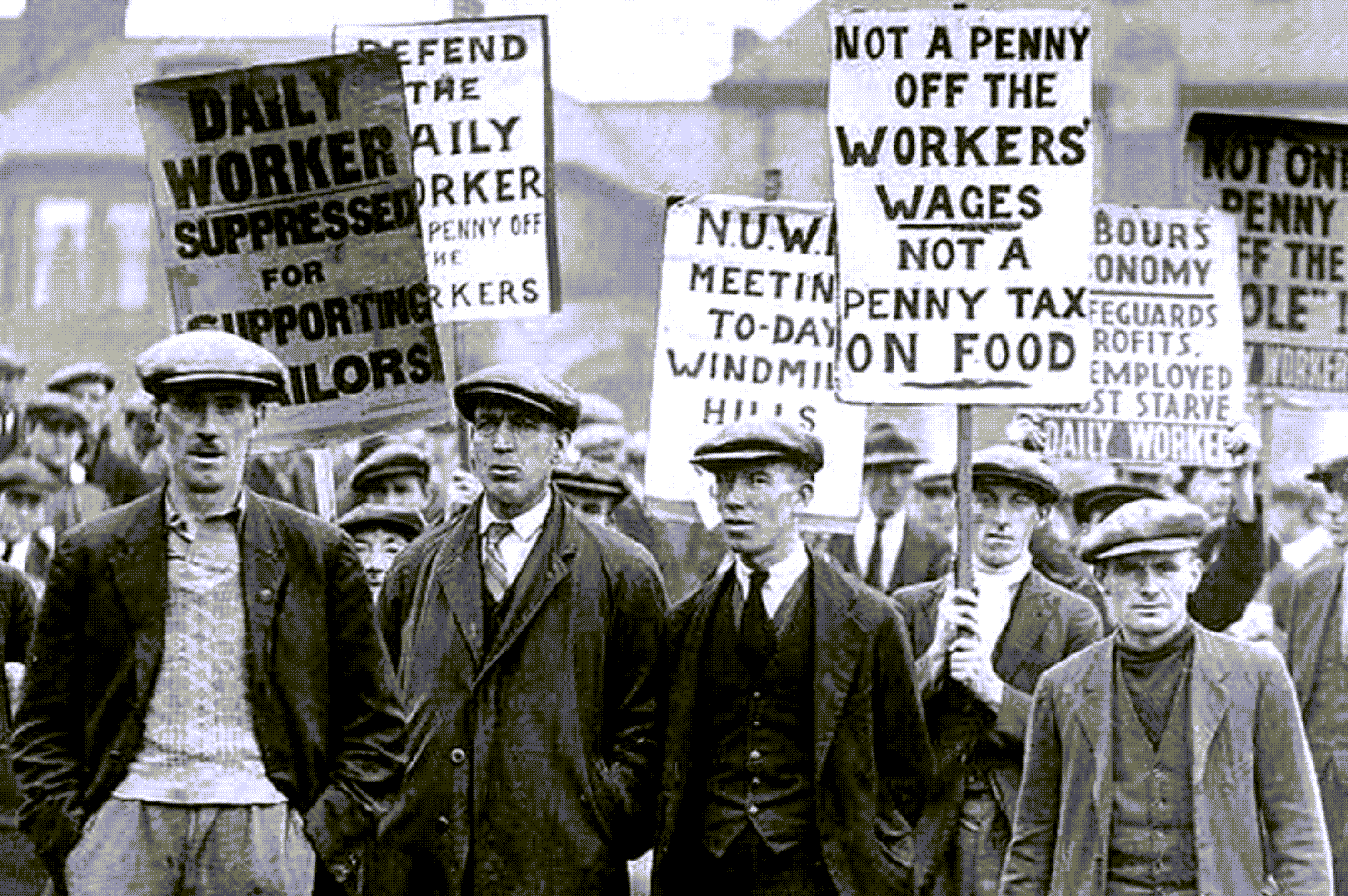
In 1924, Smith led the MFGB in a successful wage dispute, securing increases for miners. The following year, on June 30, 1925, mine owners announced wage cuts, prompting threats of a general strike. Backed by transport and railway unions, the miners held firm with the slogan “Not a penny off the pay, not a minute on the day.” On July 31, the government capitulated, providing a subsidy until May 1, 1926 – an event dubbed “Red Friday” as a victory for labour solidarity.
The Samuel Royal Commission, established to investigate the industry, reported in March 1926, criticizing owners but recommending subsidy withdrawal and wage reductions while rejecting nationalization. Smith rejected the report outright, reaffirming the miners’ stance.
The General Strike and Lockout (1926)
In May 1926, failed negotiations led to the General Strike, called by the TUC in support of the miners. Over 1.7 million workers struck, paralyzing industries. Smith, alongside MFGB Secretary A. J. Cook, led the miners, but tensions arose with TUC leaders like Jimmy Thomas. The strike ended on May 12 after nine days, with the TUC accepting Samuel’s terms, leaving miners locked out.
The seven-month lockout followed, with the government suspending the Seven Hours Act, allowing an eight-hour day. Hardship mounted, and by November, most miners returned to work under worse terms, facing victimization and blacklisting. Smith blamed the defeat on disunity but praised the miners’ motives.
Later Career and Resignation (1927–1934)
Post-strike, the 1927 Trade Disputes Act curtailed union powers, leading to MFGB membership declines. In 1929, Smith resigned as MFGB President in protest against an agreement to lengthen mining hours, which Yorkshire miners opposed. He unsuccessfully sought re-election in 1930 and 1931.
At the 1930 Miners’ Federation Conference in Weston-Super-Mare, Smith defended Yorkshire against accusations of desertion during the 1926 disputes, amid stormy debates over the “butty” system and national agreements.
Smith continued rescue work, including the Bentley Pit Disaster in 1931 and the Wharncliffe Woodmoor Colliery Disaster in 1936. In 1932, he served as Mayor of Barnsley. A 1931 nationwide collection among miners funded a bust of him at Barnsley’s Miners’ Hall and homes for aged miners named in his honour.
In November 1934, at age seventy-two, Smith retired from Barnsley Town Council after eleven years of service.
Final Years and Legacy (1935–1938)
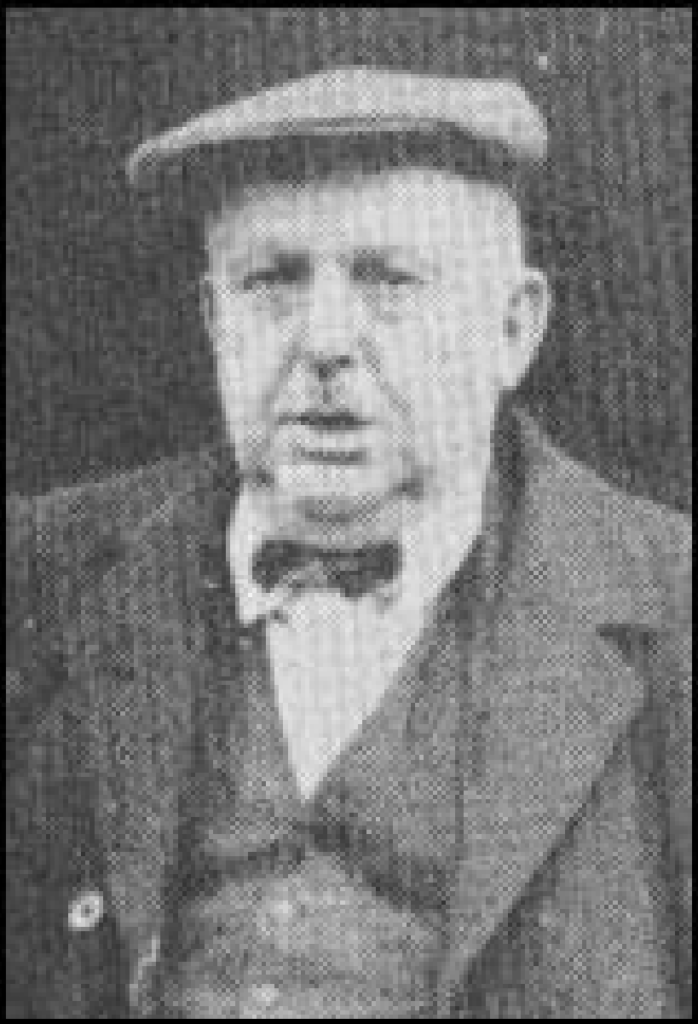
Smith remained YMA President until his death. Known for his massive build, strong jaw, and tenacity, he was a formidable negotiator with a suspicious nature toward capitalism, yet sensitive to hardship and infused with Yorkshire humour. He distrusted figures like Lord Northcliffe and fought communism within unions.
On June 16, 1938, Smith died at age seventy-five in his Miners’ Association office at 2 Huddersfield Road, Barnsley. His legacy endures as a “gallant old fighter” devoted to miners, embodying the struggle for fair wages and conditions. Obituaries highlighted his rise from workhouse orphan to union leader, and his gruff, broad Yorkshire demeanour.
Smith’s career exemplified the transition from local activism to national leadership, influencing labour history through his role in the General Strike and advocacy for miners’ welfare. Though criticized for doggedness and limited vision, his lifelong dedication inspired generations.
Citations and Credits
- Primary details drawn from provided documents: (Spartacus Educational biography by John Simkin, updated January 2020);
- “Leeds_Mercury_20_November_1929”;
- “Evening Dispatch 13th August 1930”;
- “Huddersfield_Daily_Examiner_08_September_1934_0003”.
- Additional biographical details from Wikipedia: “Herbert Smith (trade unionist)” (accessed via tool, last edited prior to February 2026).
- Election and constituency confirmation from Wikipedia and Spartacus Educational.
- Obituary insights from The New York Times (June 17, 1938).
- Conference speeches from NUM archives (1925 and 1927 addresses).
Author